Biggest A20 Wireless Buying Mistakes (And How to Avoid Them)
The A20 Wireless has become a recognizable name for buyers seeking a balance of convenience, battery life, and wireless sound. Whether marketed as true wireless earbuds or as a compact on-ear headset, models carrying the A20 Wireless name attract shoppers across commuting, fitness, office, and casual-listening use cases. That popularity also leads to common buying mistakes: buyers either assume too much from the product name, miss important compatibility details, or prioritize one feature without weighing practical trade-offs.
Introduction: Why A20 Wireless Deserves a Careful Look
On paper, A20 Wireless often promises long battery life, solid wireless range, and user-friendly controls. In reality, the experience a buyer cares about depends on how they will use the A20 Wireless. A commuter values noise isolation and call clarity; a gamer worries about latency; a fitness user needs a secure fit and sweat resistance. Many buyers evaluate A20 Wireless models based on a single spec — for example, "20 hours battery" — and end up disappointed because real-world factors like ANC, codec performance, and firmware updates affect daily use.
This article walks through the most common mistakes people make when buying A20 Wireless products and explains how to avoid them. It includes a practical product analysis, pros and cons, an easy comparison table against broad alternatives, and a buying guide that aligns A20 Wireless features with real-world needs.
Detailed Product Analysis: What to Inspect About the A20 Wireless
Because "A20 Wireless" can refer to earbuds, neckbands, or compact on-ear designs depending on the seller, evaluate the following dimensions before committing to a purchase.
1. Comfort and Fit
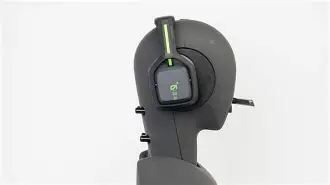
Comfort is subjective and often the single biggest determinant of long-term satisfaction. A20 Wireless models can range from in-ear tips to cushioned on-ear pads. Buyers frequently assume the included tips or earpads will fit perfectly; they do not. Real-world use cases highlight differences:
- Commuters want passive isolation to reduce ambient noise without high ANC levels.
- Runners need secure fit and an IP rating against sweat.
- Office users prioritize soft materials for extended wear.
Try to test fit where possible or verify the return policy. If buying online, check whether extra eartip sizes or third-party accessories are readily available.
2. Battery Life: Advertised vs Reality
Battery claims often represent ideal conditions: moderate volume, no ANC, and fresh batteries. With ANC enabled, voice calls, or frequent device switching, expect real-world endurance to drop. A20 Wireless buyers should look at:
- Battery life per charge and total with charging case (for earbuds).
- How long fast-charging gives usable playtime.
- Charge connector type (USB-C is more future-proof than micro-USB).
For travel or long workdays, pay attention to whether the A20 Wireless supports quick top-ups and whether the case can fully recharge the earbuds multiple times.
3. Audio Quality and Tuning
Audio is where subjective preference meets objective performance. A20 Wireless units often aim for a consumer-friendly sound signature: emphasized bass and clear mids. Buyers must determine whether the default tuning aligns with use cases:
Find top-rated Audio & Headphones products at great prices.
See Deals →- Podcasts and calls benefit from forward mids and natural-sounding voices.
- Electronic and hip-hop fans may prefer stronger low-end response.
- Classical and acoustic listeners need balanced, transparent presentation.
Check whether the A20 Wireless offers an app with EQ presets or a manual equalizer; app support can turn an okay pairing into one tailored for a buyer’s tastes.
4. Noise Control: ANC, Passive Isolation, and Transparency Modes
A20 Wireless models vary widely here. Some rely on passive isolation (good sealing), while others include active noise cancellation (ANC) or transparency modes for ambient awareness. Common buyer mistakes:
- Expecting ANC to remove all noise — it reduces but does not eliminate environmental sound.
- Overlooking wind noise performance — some ANC mics struggle outdoors.
- Failing to test transparency mode latency and voice clarity in calls.
For frequent flyers and train commuters, compare recorded ANC performance and real-world reviews rather than only manufacturer claims.
5. Microphone and Call Quality
Many people buy A20 Wireless for phone calls and video meetings. Microphone performance depends on the microphone array, wind suppression, and how the device routes voice vs ambient sound. Check whether the A20 Wireless supports dedicated call modes or adaptive noise reduction for voice. Buyers should evaluate call quality in a busy office, on a street, and in a quiet room to understand how the A20 Wireless handles different scenarios.
6. Connectivity, Codecs, and Latency
Bluetooth version, supported codecs (SBC, AAC, aptX, LDAC), and multipoint support matter depending on the buyer’s devices. Gamers and content creators should minimize latency; streaming video watchers want robust codec support to preserve audio fidelity. Typical pitfalls:
- Buying A20 Wireless without checking whether it supports the preferred codec of their phone.
- Assuming older Bluetooth versions perform identically to newer ones in dense environments.
- Neglecting multipoint pairing if switching between phone and laptop frequently.
7. Build Quality and Durability
Look beyond glossy marketing photos. Hinges, cable strain relief, and case lid mechanisms are common failure points. For exercise use, confirm IP ratings and materials that survive sweat, salt, and repeated handling. A20 Wireless shoppers often mistake light weight for fragility; handling samples or reading long-term user reviews can reveal build trade-offs.
Pros & Cons
- Pros:
- Strong convenience due to wireless freedom and compact form factor.
- Often long advertised battery life suitable for travel and all-day use.
- Comfort-oriented designs that suit prolonged wear for many users.
- Competitive price-to-feature balance compared with premium alternatives.
- Cons:
- Performance varies across batches and versions; some units need firmware refinement.
- ANC and mic performance frequently lag behind class-leading competitors.
- Codec and multipoint support can be limited on lower-cost iterations.
- Fit and isolation differences make returns common among first-time buyers.
Comparison Table: A20 Wireless vs Typical Alternatives
| Feature | A20 Wireless (Typical) | Generic True Wireless Earbuds | Over-Ear Bluetooth Headphones |
|---|---|---|---|
| Portability | High — compact case, pocketable | Very High — smallest form factor | Low — bulkier, less pocketable |
| Battery Life (Avg) | Good — multi-day with case in light use | Variable — short per-ear, extended with case | Very Good — long single-charge playtime |
| ANC / Noise Control | Moderate — some models include ANC | Limited/Moderate — ANC in higher tiers | Strong — better passive+active sealing |
| Call Quality | Average — depends on mic design | Variable — small mics struggle outdoors | Good — larger mic arrays and better beamforming |
| Latency | Low to Moderate — depends on codec | Low to Moderate | Lowest — dedicated gaming/wired options exist |
| Price Range | Mid-range — value-oriented | Wide — budget to premium | Mid to High — premium models common |
Buying Guide: How to Choose the Right A20 Wireless for Specific Use Cases
Use the following checklist aligned to real-world use cases to avoid the most common mistakes when buying A20 Wireless products.
For Commuters and Frequent Flyers
- Prioritize noise control: look for effective ANC or tight passive isolation. Verify how ANC performs on recorded commutes or flights.
- Check battery life with ANC on. Advertised battery without ANC is not an indicator for long trips.
- Confirm case durability and airline-friendly charging (USB-C power banks and airline charging rules).
For Office and Remote Meetings
- Microphone clarity is critical; seek models with dedicated voice algorithms and strong wind suppression.
- Multipoint pairing helps when switching between a laptop and smartphone during meetings.
- Comfort for long sessions — soft earpads or lightweight in-ear tips reduce fatigue.
For Fitness and Outdoor Use
- IP rating and sweat resistance are non-negotiable. IPX4 or higher is recommended for sweat and light rain; higher ratings for more demanding conditions.
- Secure fit with earhooks or multiple tip sizes prevents dropouts during activity.
- Look for anti-wind mic performance if running outdoors frequently.
For Gaming and Low-Latency Needs
- Confirm low-latency codec support and any dedicated game modes (some A20 Wireless variants include a low-latency connection mode).
- Consider a wired option or USB transmitter if the buyer requires absolute minimal latency.
- Check microphone monitoring options to avoid speech delays in competitive settings.
For Audiophiles and Music Lovers
- Codec support (aptX, AAC, LDAC) matters when paired with compatible source devices. Without matching codec support, high-resolution content may downscale.
- App-based EQ and firmware tuning are valuable for aligning the A20 Wireless to listener preferences.
- Seek measurements and reviews that include frequency response curves rather than relying solely on descriptive language.
General Checklist Before Purchase
- Read multiple user reviews and long-term reports to understand firmware reliability and battery degradation patterns.
- Verify warranty length, return window, and the ease of obtaining replacement parts like eartips or pads.
- Confirm compatibility with primary devices — check codecs, Bluetooth version, and multipoint support.
- Inspect charging interface — USB-C is preferred for faster, universal charging.
- Test hands-free functions and shortcuts: do the touch controls or buttons work reliably? Can they be disabled or remapped via an app?
Common Buying Mistakes and How to Avoid Them
Mistake 1: Buying Based on a Single Specification
Fix: Evaluate the full user experience. Battery life, ANC, microphone, fit, and app support all interact. Create a priority list based on how the buyer will use the A20 Wireless and compare models against that list.
Shop the latest Audio & Headphones picks on Amazon.
Browse Now →Mistake 2: Ignoring Codec and Device Compatibility
Fix: Match codecs to the primary listening device. If the buyer uses an iPhone exclusively, AAC support matters. For Android users looking for higher bitrate streaming, aptX or LDAC support improves fidelity.
Mistake 3: Overestimating ANC and Noise Isolation
Fix: Look for real-world ANC tests and user reports. Consider passive isolation and ear tip fit — sometimes swapping tips or choosing a different earpad makes a bigger difference than enabling ANC.
Mistake 4: Forgetting About Firmware and Software Support
Fix: Research manufacturer history. Brands that regularly issue firmware updates often improve performance over time. Check whether the A20 Wireless receives ongoing support and whether the app is stable and useful.
Mistake 5: Neglecting Return Policies and Trial Periods
Fix: Only buy from vendors with generous return policies or trial periods. Fit and comfort can only be validated in long-term use. If returns are difficult, consider local retailers that allow in-person testing.
Real-World Use Cases and What Buyers Typically Care About
Relating product features to everyday scenarios helps identify which trade-offs matter.
- Daily commuter: Values ANC and battery life. Cares about call clarity when stepping off the train and quick charging between commutes.
- Remote worker: Prioritizes microphone performance and comfort, with multipoint pairing to juggle meetings on a laptop and calls on a phone.
- Fitness enthusiast: Chooses IP rating and secure fit. Wants earbud stability through intense motion and sweat resistance that preserves long-term durability.
- Traveler: Needs solid ANC, long battery life, and durable case design. Prefers features that ease airplane use, like transparency modes and fast charging.
- Casual listener: Looks for value — balanced sound and simple controls, without needing premium codecs or advanced ANC.
Conclusion
The A20 Wireless can be an excellent match for many buyers, but satisfying long-term use requires careful attention to more than just headline specs. Common mistakes — buying solely for battery numbers, assuming ANC will solve all noise issues, ignoring codec compatibility, and neglecting fit — are easy to avoid with a short checklist tailored to personal use cases. Prospective buyers should weigh what matters most for commuting, fitness, gaming, or remote work; verify fit and mic performance where possible; and confirm warranty and return options. With a little diligence, the A20 Wireless becomes not a gamble but a reliable, convenient audio companion that suits everyday life.