Chromebook 14 2021 First Look: Unboxing and Impressions
The landscape of personal computing underwent a seismic shift over the last few years, driven by a global surge in remote work and distance learning. In 2021, the Chromebook solidified its position not just as a budget alternative to Windows and macOS, but as a primary driver of productivity for a vast segment of users. The Chromebook 14 2021 represents a pivotal entry in this evolution, aiming to strike a delicate balance between price, performance, and portability. For those who spent years associating ChromeOS exclusively with plastic, underpowered educational devices, this iteration seeks to change that narrative by offering a more refined hardware experience that aligns with the needs of modern professionals and students alike.
The core appeal of the Chromebook 14 2021 lies in its simplicity and the speed of the ChromeOS ecosystem. In a world where cloud-based applications like Google Workspace, Microsoft 365, Slack, and Zoom have become the standard, the need for heavy local storage and high-powered desktop processors has diminished for many. This article provides an in-depth analysis of the 2021 model, examining the unboxing experience, the physical build quality, the internal specifications, and how it holds up in real-world scenarios ranging from academic research to creative content consumption.
Unboxing and Initial Aesthetic Impressions
Upon opening the packaging, the Chromebook 14 2021 presents a minimalist aesthetic. Manufacturers in 2021 moved toward more sustainable, recycled cardboard packaging, and this device follows suit. Inside, the contents are straightforward: the laptop itself, a USB-C power adapter, and a quick-start guide. There is an immediate sense of "plug-and-play" utility here. Because the device relies on USB-C charging, users can often use the same charger for their phone and laptop, reducing cable clutter during travel.
The first physical impression of the device is its surprisingly slim profile. While earlier 14-inch models often felt bulky or heavy, the 2021 chassis utilizes a mixture of high-density polycarbonate and, in some configurations, an aluminum lid. This gives the laptop a rigid feel that resists the "keyboard flex" often found in budget-friendly electronics. The 14-inch form factor is widely considered the "sweet spot" for portability. It offers significantly more screen real estate than an 11.6-inch student model but remains much easier to slide into a standard backpack than a 15.6-inch powerhouse. The matte finish on the exterior is particularly effective at hiding fingerprints, a small but appreciated detail for those who use their devices in public spaces like cafes or libraries.
Hardware Analysis: Screen, Keyboard, and Ports
The centerpiece of any laptop experience is the display, and the Chromebook 14 2021 generally features a 1080p Full HD IPS panel. This is a significant step up from the 768p displays that plagued the budget market for years. The IPS technology ensures that colors remain consistent even when viewing the screen from an angle, which is essential for students sharing a screen during a project or a family watching a video together. The bezels have been narrowed significantly compared to previous years, reflecting a more modern design language that maximizes the 14-inch canvas.
The keyboard and trackpad are where the Chromebook 14 2021 truly shines as a productivity tool. The keys offer a tactile "clicky" feel with roughly 1.4mm of travel, which is sufficient for long typing sessions. One of the unique aspects of the Chromebook keyboard is the inclusion of dedicated function keys for the Chrome browser—buttons for back, forward, refresh, and full-screen mode—alongside the "Everything Button" (formerly the Search key). The trackpad is spacious and supports multi-touch gestures, allowing users to swipe between open windows or see all active desks with ease. The surface of the trackpad is smooth, providing a low-friction experience that rivals much more expensive Windows ultrabooks.
Connectivity in 2021 became more streamlined. The device typically includes two USB-C ports (one on each side for flexible charging), at least one USB-A port for older peripherals like flash drives or mice, a microSD card slot for storage expansion, and a 3.5mm headphone jack. The inclusion of Wi-Fi 6 in many 2021 configurations was a notable upgrade, ensuring that the laptop could maintain stable, high-speed connections even on crowded home networks with multiple streaming devices.
Discover deals on Electronics — updated daily.
Shop Amazon →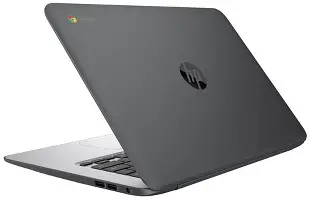
Performance and Software Integration
Under the hood, the Chromebook 14 2021 was designed to handle the "tab-heavy" lifestyle of the modern user. Most units come equipped with either an Intel Celeron, Pentium, or an 11th Gen Core i3 processor, paired with 4GB or 8GB of LPDDR4X RAM. While these specs might seem modest compared to a gaming PC, ChromeOS is exceptionally lightweight. The Operating System boots in less than ten seconds, and the transition from the login screen to a fully functional desktop is nearly instantaneous.
Real-world performance testing reveals that the 8GB RAM configuration is the ideal choice for those who frequently keep twenty or more tabs open while simultaneously running an Android app or a Linux development environment. Because ChromeOS treats every tab as an individual process, having that extra memory overhead prevents the system from "killing" background tabs, which can be a major annoyance on 4GB machines. The internal storage is usually 64GB or 128GB of eMMC flash memory. While this is less than a traditional hard drive, the philosophy of the Chromebook is that the majority of your files—documents, photos, and spreadsheets—reside in Google Drive, making local storage less of a bottleneck.
The Android and Linux Ecosystem
A major selling point of 2021 Chromebooks is the seamless integration of the Google Play Store. This allows users to download and run Android apps directly on their laptop. For example, a user can use the mobile version of Lightroom for quick photo edits or the Netflix app to download movies for offline viewing during a flight. Additionally, the inclusion of a Linux (Crostini) container allows more technical users to install desktop-grade software like GIMP, LibreOffice, or even coding environments like Visual Studio Code, making this device a legitimate tool for web developers on a budget.
Pros and Cons
- Pros: Excellent Battery Life – In standard office use with medium brightness, the device easily lasts 10 to 12 hours, meaning you can leave the charger at home for a full day of work or school.
- Pros: Rapid Boot Times – The transition from a cold start to browsing the web takes seconds, making it perfect for "hop-on, hop-off" tasks.
- Pros: Lightweight and Durable Build – Weighing in at approximately 3.2 pounds, it is light enough for all-day carry without feeling fragile.
- Pros: USB-C Ecosystem – The ability to charge from either side and use the same charger for multiple devices is a significant lifestyle improvement.
- Pros: Security and Updates – ChromeOS is built with sandboxing and verified boot, meaning it is inherently more resistant to traditional viruses than other platforms.
- Cons: Limited Offline Capability – While Android apps and Google Docs support offline mode, the device still relies heavily on an active internet connection to reach its full potential.
- Cons: eMMC Storage Speed – Though faster than a mechanical hard drive, eMMC storage is slower than the NVMe SSDs found in high-end laptops, which can be noticed during large file transfers.
- Cons: Dim Screen in Direct Sunlight – The display typically maxes out at 250 to 300 nits, which is perfectly fine for indoor use but can be difficult to see when working outside on a bright day.
Comparative Analysis: Finding the Right 14-Inch Model
Buyers often struggle to differentiate between the various configurations of the Chromebook 14. Depending on the specific manufacturer (such as HP, Acer, or ASUS), the 2021 model could vary slightly in its port selection or screen brightness. The following table provides a comparison of how the standard 2021 specifications stack up against the entry-level "educational" models and the "premium" enterprise models available in the same year.
| Feature | Education Entry-Level | Chromebook 14 (2021 Standard) | Enterprise/Premium Tier |
|---|---|---|---|
| Processor | Intel Celeron N4020 | Intel Pentium Silver or Core i3 | Intel Core i5 or i7 |
| RAM | 4GB | 8GB | 16GB |
| Display Resolution | 1366 x 768 (HD) | 1920 x 1080 (FHD) | 2K or 4K Touchscreen |
| Chassis Material | Reinforced Plastic | Polycarbonate / Aluminum Mix | Full CNC Aluminum / Magnesium |
| Keyboard | Non-backlit | Optional Backlit | Standard Backlit / Glass Trackpad |
Buying Guide: Who Should Choose the Chromebook 14 2021?
Choosing a laptop in the 2020s requires an honest assessment of your daily digital habits. The Chromebook 14 2021 is not a "one size fits all" machine, but it hits the target for several specific groups of people. Understanding which category you fall into will help determine if this is the right investment for you.
The University Student
For students, the primary requirements are weight, battery life, and ease of collaboration. The Chromebook 14 2021 excels here because most university coursework is now submitted via Canvas, Blackboard, or Google Classroom. The 14-inch screen allows for two windows to be snapped side-by-side—a PDF of a textbook on one side and a Google Doc for notes on the other—without the text becoming unreadably small. The long battery life means you don't have to scramble for a seat near a power outlet in a crowded lecture hall.
The Remote "Cloud" Professional
If your workday consists of answering emails, attending Google Meet or Zoom calls, and managing projects in tools like Trello, Asana, or Salesforce, a Windows laptop often introduces unnecessary friction with long update cycles and background processes. The Chromebook 14 2021 provides a focused, distraction-free environment. The built-in webcam in the 2021 models usually features improved noise-reduction microphones, which is a critical feature for the "Zoom era" of professional communication.
Shop the latest Electronics picks on Amazon.
Browse Now →The Casual Home User
For those who primarily use their computer to browse the web, check social media, pay bills, and stream video, the Chromebook 14 is often the smartest financial choice. It requires almost zero maintenance. There are no registry files to clean, no fragmented drives to optimize, and the system updates itself automatically in the background. It is an excellent "kitchen table" laptop that multiple family members can share, thanks to the ability to quickly switch between Google accounts while keeping everyone's data private and separate.
What to Look for When Shopping
When looking at listings for the Chromebook 14 2021, prioritize the RAM over the storage. Since you can always add a $20 microSD card to increase storage, the internal 64GB vs 128GB debate is less important than the 4GB vs 8GB RAM debate. In 2021, 8GB of RAM became the recommended minimum for anyone planning to keep the device for more than two years. Additionally, checking for a backlit keyboard is highly recommended; many standard models include it as an optional feature, and it makes a massive difference for usability in dimly lit environments like evening flights or late-night study sessions.
Thermal Management and Longevity
One often-overlooked advantage of the Chromebook 14 2021 is its thermal efficiency. Because the processors used in these machines are designed for high efficiency, many models are "fanless." This means the device relies on passive cooling, resulting in a laptop that is completely silent during operation. For users who hate the sound of "jet engine" fans spinning up when they open a few extra tabs, this is a major benefit. Furthermore, the lack of a fan means there are no vents to suck in dust or pet hair, which can often lead to hardware failure in traditional laptops over several years of use.
In terms of longevity, Google provides an "Auto Update Expiration" (AUE) date for every Chromebook. The 2021 models typically have a long support window extending well into the late 2020s. This ensures the device continues to receive security patches and new features, protecting the user's investment. When compared to a budget Windows laptop that might become sluggish as the OS grows heavier over time, ChromeOS tends to remain fast throughout the entire life of the hardware.
Conclusion
The Chromebook 14 2021 is a testament to how far the "browser-based" laptop has come. It successfully moves away from the "toy-like" feel of early netbooks and enters the territory of genuine productivity hardware. It respects the buyer's budget while refusing to compromise on the essentials: a high-quality Full HD screen, a comfortable typing experience, and a battery that truly lasts a full working day. While it might not be the choice for professional video editors or hardcore gamers, it is perhaps the most practical computer for the 90% of users who live their digital lives in a web browser. It is a sleek, quiet, and reliable companion that reflects the changing reality of how we interact with the internet in the modern age.