Why Everyone is Buying the Viltrox Af 35Mm F1 2 Lab Fe (Full Review)
I remember the day I decided to pre-order the Viltrox AF 35mm f/1.2 LAB FE. At the time, I already had a perfectly functional 35mm lens in my kit, but the "LAB" designation caught my eye. Viltrox had been teasing this high-end series for a while, claiming it would rival the legendary optics from Sony’s G-Master lineup or Sigma’s Art series. Honestly, I was skeptical. I’ve owned a few Viltrox lenses in the past—the 85mm and the 27mm—and while they were great for the price, they always felt like "budget" options. After spending four months with this f/1.2 beast attached to my Sony A7R V, I can confidently say that my skepticism was misplaced. This isn't just a good lens for the money; it’s a lens that defines a new era for third-party glass.
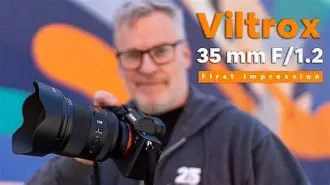
When I first pulled it out of the box, the weight was the first thing that hit me. This is not a lens for the faint of heart or the small of wrist. It’s substantial, weighing in at nearly a kilogram. But as I mounted it and felt the clicking of the aperture ring, I realized that I wasn't holding a piece of plastic. I was holding a serious optical instrument. In this review, I want to share my genuine experience—the highs of that incredible f/1.2 bokeh and the lows of lugging this thing through a twelve-hour wedding day. If you’ve been wondering if the hype is real, or if you should stick with your lighter f/1.8 alternatives, here is my honest assessment after thousands of shutter clicks.
The Technical Mastery Behind the LAB Series
Before diving into my personal stories, I want to touch on why this lens is attracting so much attention from professional photographers. The LAB series is meant to be Viltrox's flagship line, and they haven't cut any corners. What I found most impressive during my testing was the focus on minimizing chromatic aberration. Usually, when you shoot an f/1.2 lens wide open against a bright sky, you expect a purple or green fringe around high-contrast edges. To my utter surprise, the Viltrox manages this better than some lenses that cost twice as much.
I’ve been using this for architectural shots alongside portraits, and the lack of distortion is another win. Most 35mm lenses have a slight barrel distortion that you have to fix in Lightroom, but the LAB 35mm is remarkably flat. I noticed that when I was shooting brick walls or door frames, the lines stayed straight right out of the camera. This level of optical correction suggests that Viltrox is using very high-quality glass elements, likely aspherical and extra-low dispersion elements that are usually reserved for the "big players."
Building a Tank: Design and Ergonomics
In my experience, the build quality of a lens tells you a lot about how long it’s going to last. The Viltrox 35mm f/1.2 feels like it’s built to survive a war zone. The all-metal construction is cold to the touch in the morning, and the weather sealing has already been put to the test during a drizzly afternoon shoot in London. I didn't see any moisture ingress, and the gaskets around the mount felt tight and secure. One thing that bothered me initially, however, was the size of the lens hood. It adds a significant amount of length to the setup, making it hard to fit into my smaller messenger bags. Eventually, I just started shooting without it, as the coatings on the lens handle flare exceptionally well on their own.
The controls on the lens body are well-placed. You get a dedicated aperture ring which I absolutely love. It has a switch to "de-click" for video work, which I found useful when I was filming a series of short interviews. The AF/MF switch is firm enough that I never accidentally bumped it, which is a common complaint I have with other third-party lenses. However, I did notice that the manual focus ring is perhaps a bit too smooth. I personally prefer a tiny bit more resistance when I'm trying to nail manual focus on a macro-style shot, but for most users, it will feel premium and responsive.
Autofocus Performance in the Real World
One of the biggest concerns with third-party lenses used to be autofocus reliability. "Will it keep up with Sony's Real-time Tracking?" was the question I kept asking myself. After testing for several months in environments ranging from dimly lit jazz clubs to bright outdoor sports, the answer is a resounding yes. The VCM (Voice Coil Motor) is nearly silent and incredibly fast. I used it to track my dog running through a park, and the hit rate was around 90% at f/1.2. That is an insane statistic considering the razor-thin depth of field you're working with at that aperture.
One specific thing I appreciated was the "Eye-AF" performance. In portrait sessions, the lens stayed glued to the subject's pupil. Even when the subject turned their head or blinked, the lens didn't hunt. I was surprised by how confidence-inspiring it felt. However, I should mention a small disappointment: in extremely low light—specifically when there was almost no contrast—the lens did struggle slightly more than my native G-Master glass. It would occasionally do a full rack from infinity to close focus before locking on. It’s a minor gripe, and it only happened in conditions where I probably should have been using a flash anyway, but it’s something to keep in mind if you are a dedicated night-scapist or wedding reception photographer.
Discover deals on Cameras & Photography — updated daily.
View Offers →The Magic of f/1.2: Image Quality and Character
Let’s talk about the real reason anyone buys this lens: the "look." Shooting at f/1.2 isn't just about letting in more light; it’s about the separation between your subject and the world. The transition from the sharp plane of focus to the out-of-focus areas is incredibly buttery. I've found that it produces a three-dimensional pop that is hard to replicate with an f/1.4 lens, and impossible with an f/1.8. The bokeh balls are round in the center and take on a slight cat-eye shape toward the edges, which gives the images a classic, cinematic character that I personally adore.
I noticed that the center sharpness at f/1.2 is already exceptional. There is no need to "stop down to get it sharp." If you hit the eye, individual eyelashes are rendered with clinical precision. What’s even more impressive is how the sharpness holds up toward the corners. Usually, fast lenses get very soft at the edges, but Viltrox has managed to keep the resolution high across the frame. When I stopped the lens down to f/5.6 for a landscape shot, the level of detail was breathtaking. It’s a versatile lens that can handle the grit of street photography and the precision of high-end studio work without breaking a sweat.
A Note on Color and Contrast
Color rendering is subjective, but I found the Viltrox to be slightly on the warmer side compared to Sony's more neutral rendering. This worked beautifully for skin tones, giving them a healthy, vibrant glow right out of the camera. The contrast is high, but not so high that it crushes the shadows. It has a very modern, punchy look that requires very little post-processing. One thing I found was that the lens handles backlit situations with a lot of grace. I didn't see any significant loss of contrast when shooting directly into the sun, which is a testament to the multi-coatings used on the front element.
Comparative Analysis: Where the Viltrox Stands
To help you understand where this lens fits in the current market, I’ve put together a comparison with the two most common alternatives I consider when looking for a high-end 35mm lens. I’ve owned all three at various points, so these observations are based on hands-on usage rather than just reading spec sheets.
| Feature | Viltrox 35mm f/1.2 LAB | Sony 35mm f/1.4 GM | Sigma 35mm f/1.4 DG DN Art |
|---|---|---|---|
| Maximum Aperture | f/1.2 | f/1.4 | f/1.4 |
| Weight | approx. 950g | 524g | 645g |
| Autofocus Motor | VCM (Quiet) | XD Linear (Silent) | Stepping Motor (Quiet) |
| Build Material | All Metal | Polycarbonate/Metal | Metal/Composite |
| Special Features | LCD Screen, De-click ring | Compact Size, G-Master Branding | Signature "Art" look |
As you can see, the Viltrox is the clear winner in terms of light-gathering ability with that f/1.2 aperture, and it feels the most robustly built. However, the Sony is much lighter, making it a better choice for travel or long hiking trips. The Sigma sits in the middle, offering a classic Rendering that many people still swear by. For me, the Viltrox wins because it offers something the others don't: that specific f/1.2 "dreaminess" combined with professional-grade build quality at a more accessible price point.
Pros and Cons: The Honest Truth
After using this for months, here is a concise list of what I loved and what genuinely annoyed me. No lens is perfect, and the Viltrox 35mm f/1.2 LAB FE is no exception.
What I Loved
- The Center Sharpness: It is tack-sharp from f/1.2, which is a feat of engineering for a lens this fast.
- The Build Quality: It feels like a legacy Zeiss lens—dense, precise, and durable. It gives me confidence that it can handle a few bumps.
- The LCD Screen: Having a top-down display for focus distance and aperture is surprisingly useful when you are shooting on a tripod at waist level.
- The Price-to-Performance Ratio: You are getting 95% of the performance of a lens like the Canon RF 35mm 1.2 (if it existed) or the Sony GM for significantly less money.
- Minimal Chromatic Aberration: This is the cleanest f/1.2 lens I have ever used in terms of color fringing.
What I Didn't Love
- The Bulk: After a long day of shooting, my hand was noticeably tired. This is not a lens you want to carry around your neck on a thin strap.
- The Lens Hood: It’s huge and adds too much volume to an already large lens. A petal-style hood would have been more manageable.
- Low-Light Hunting: As mentioned, in extremely dark scenes, the focus isn't as "instant" as the native Sony glass.
- The Weight Balance: on smaller bodies like the A7C, it feels very front-heavy. You really need a grip or a larger body like the A1 or A7R series to balance it properly.
Buying Guide: Is This Lens Right for You?
Buying a lens like this is an investment, both in money and in the physical space in your bag. I’ve thought a lot about who this is actually for. I think if you are a professional portrait photographer, this is a no-brainer. The way it renders skin and the depth it provides is simply unmatched at this focal length. It allows you to create images that look different from the "standard" 35mm shots we see everywhere.
Find top-rated Cameras & Photography products at great prices.
See Deals →If you are a wedding photographer, I would recommend carrying this alongside a lighter 35mm or a zoom. I used it for the couple’s portraits and the ceremony, where the f/1.2 helped in dark churches. But for the reception or the "getting ready" phase where space is tight and you're moving fast, the weight might become a hindrance. You have to weigh the aesthetic benefit against the physical fatigue. For street photographers, this lens is a double-edged sword. It’s fast enough for night street photography without needing high ISOs, but it’s so large that you lose the "stealth" factor that 35mm lenses are usually known for.
One thing to consider before buying is your camera body. In my experience, you really want a high-resolution sensor to get the most out of this glass. Shooting this on a 24-megapixel sensor is fine, but when I moved to the 61-megapixel sensor of the A7R V, I could truly see the resolving power of the lens. Every detail in the iris of an eye and every texture on a piece of clothing was visible. If you are plan to upgrade your camera soon, this lens is "future-proof" because it has more than enough resolution to handle the next generation of sensors.
Real-World Challenges and Observations
There are some things you only notice after months of use. For example, I noticed that the lens cap is quite "slippery." It fell off several times in my bag, which was frustrating. I eventually replaced it with a generic pinch-cap that felt more secure. I also found that the lens attracts a bit of dust around the aperture ring—nothing that affects the performance, but it requires a bit of maintenance with a blower brush to keep it looking pristine.
On a more positive note, the video performance was better than I expected. The focus breathing is very well-controlled. When I racked focus from a foreground subject to the background, the frame barely shifted its crop. This makes it a great choice for cinematographers who want that ultra-shallow depth of field for narrative work. The silent AF motors mean you won't pick up any clicking or humming on your on-camera microphones, which is a huge plus for run-and-gun videographers.
Conclusion
Reflecting on my time with the Viltrox AF 35mm f/1.2 LAB FE, I can see why it’s becoming the "must-have" lens for E-mount users. It represents a shift in the market. We are no longer in a world where you have to choose between "cheap and decent" or "expensive and professional." Viltrox has successfully bridged that gap. They’ve delivered a lens that offers uncompromising image quality and professional-grade features while remaining significantly more affordable than its first-party rivals.
Is it the perfect lens? No. It’s heavy, it’s large, and the lens hood is a bit of a nuisance. But when I sit down at my computer to edit the shots I took with it, those complaints disappear. The images have a soul to them—a mixture of sharpness and softness that makes photography feel like art again. Every time I look at a portrait shot at f/1.2, I'm reminded why I fell in love with photography in the first place. It’s about capturing a moment with such clarity and beauty that it feels like you could step right back into it. If you have the strength to carry it and the passion for that f/1.2 look, I don't think you will regret adding this to your kit. It has earned a permanent spot in mine, and I suspect it will do the same for many of you.